Customer research

Just had to repost this - it’s a gem.
Consultants take note.
Read between the lines.
Everything you need to know about customer research excellence is here.
Do this and deeply understand the situation - before anything else.
Why BYO Cups Don’t Work June 2021 “We’ll design a reusable BYO cup that’s ubiquitous.”
August 2021 “BYO cups can’t scale – not yet.” Just as well we listened first — because… | Karen Monaghan
Why BYO Cups Don’t Work June 2021 “We’ll design a reusable BYO cup that’s ubiquitous.”
August 2021 “BYO cups can’t scale – not yet.” Just as well we listened first — because listening changed the direction of the work. We listened to the people in the arena: customers, café owners, baristas, roasters. The biggest blocker to BYO cups wasn’t motivation. It was the loss of standards. And coffee runs on standards. - 6, 8 and 12oz cups - The grind - The timing of the shot - The milk texture and latte art - The flow behind the pass - The speed of service - The same result for the same customer, every single day. Every second counts. BYO cups introduce variation into a system designed to remove it. For cafés, that variation shows up as friction and leakage: - Non-standard sizes - Hygiene concerns - Double handling - Different thermal properties - Inconsistent outcomes: too hot, too weak, too strong, size confusion. - Order matching complexity (“the pink cup for the woman in the white cap”) - Increased barista cognitive load - Profit leakage: extra shots, wasted milk, remade orders, time. This isn’t a barista problem. It’s a system problem. So the cup itself went on the back burner. Our focus shifted to protecting the flow of the café — for the team and for the customer. In 2021, the only cafés we saw achieving close to 100% reuse weren’t relying on BYO. They were using second‑hand cup libraries. That’s where we turned next. Not to design another object. But to understand the principles that made cup libraries work — and why shared infrastructure protected standards instead of breaking them. That shift changed everything. More on that next. Gin and MJ behind the pass when we trialled our first second hand cup library at The Corner Store Subiaco, in collaboration with Good Sammy Enterprises. We achieved a shift from 100% single use to 100% reuse in 7 months. Cups are sized for volume and avoidance measured. Note - no plastic. Only ceramic, steel or glass.
 Karen Monaghan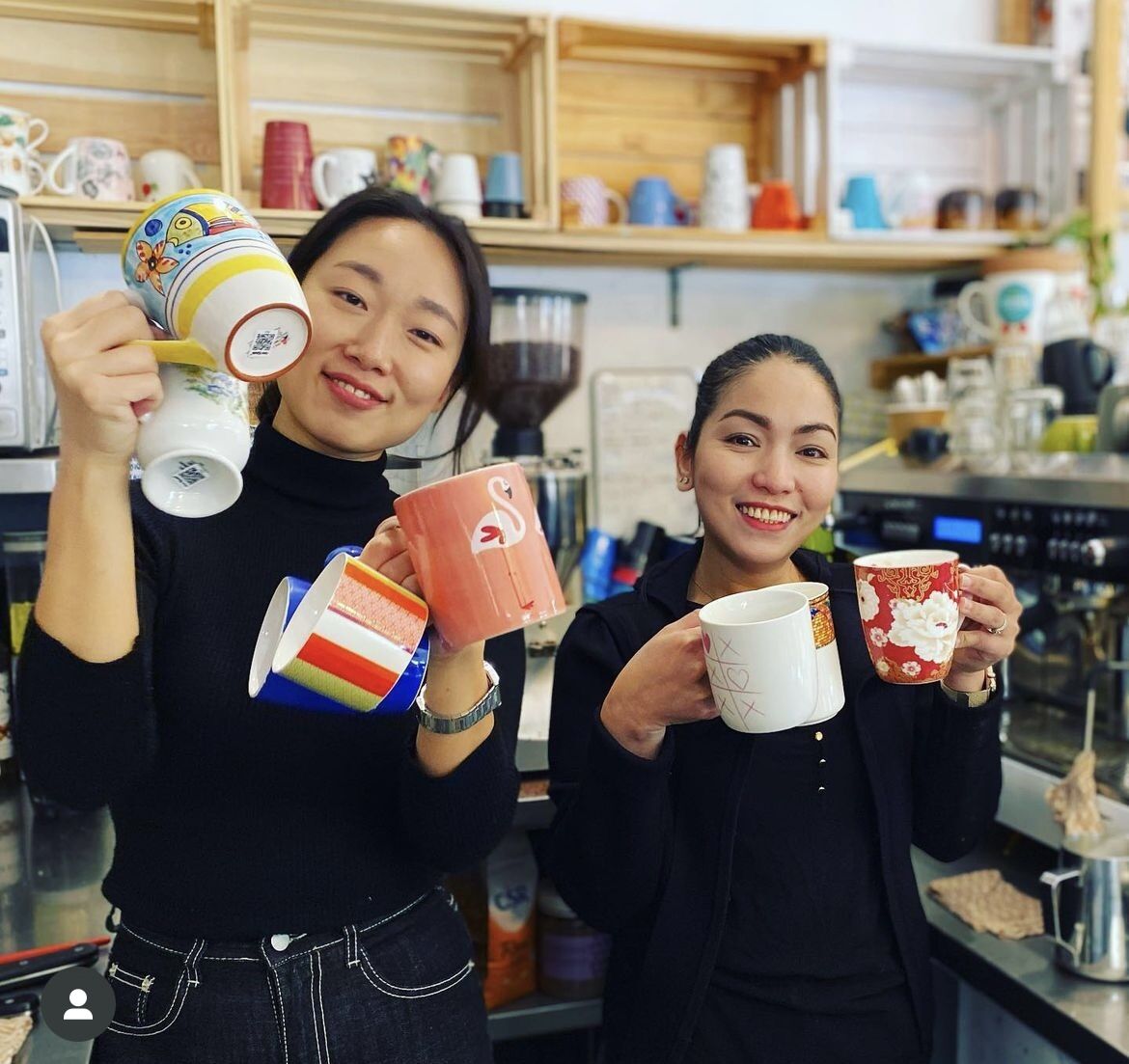
Clive Griffiths Newsletter
Join the newsletter to receive the latest updates in your inbox.